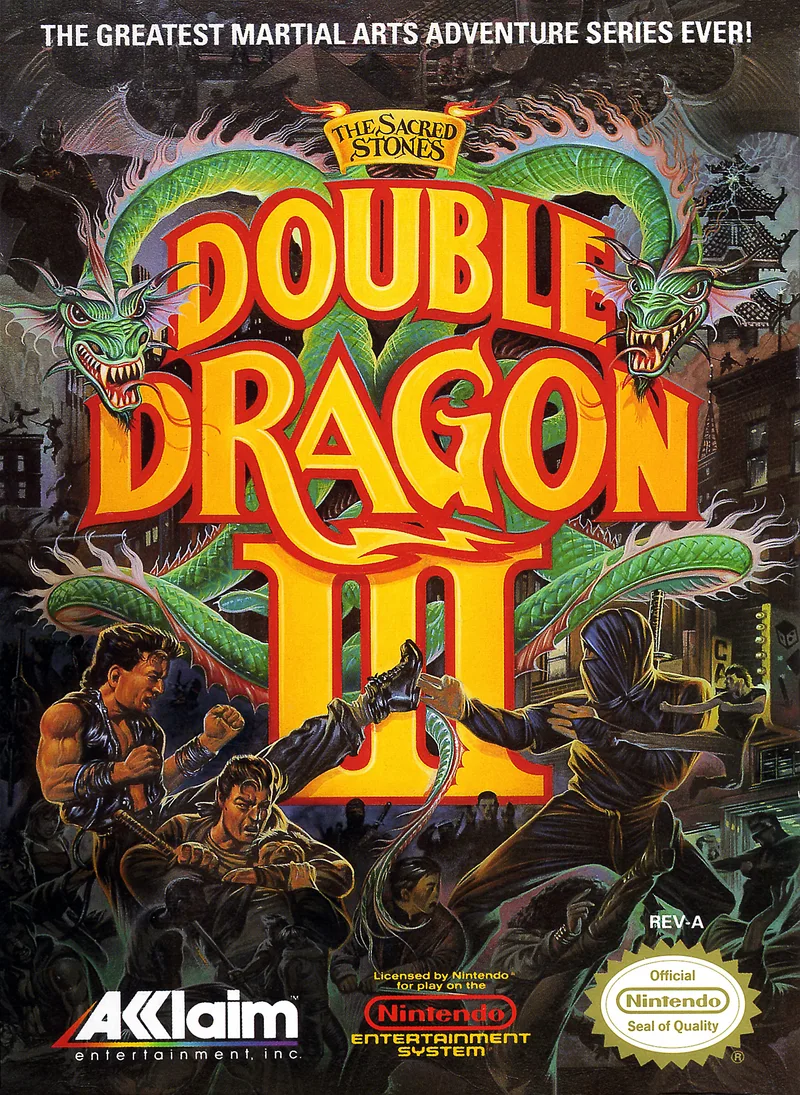
Double Dragon III: The Sacred Stones (1991)
Commodore Amiga · 1991
About this game
A year after the events of Double Dragon II: The Revenge , the Supreme Black Shadow Sensei and his Black Shadow Warriors lay defeated.
Life has returned to normality for Billy Lee who is now running a dojo training students in the field of martial arts.
↓ Read more
However, one day when Billy is away, the dojo is attacked and Marion is kidnapped.
A soothsayer named Hiruko has information on Marion's disappearance: She claims the kidnappers will release Marion in exchange for the three sacred stones of power.
Hiruko knows the locations of the stones, but they are located all over the earth.
Billy Lee (and his brother Jimmy in the two player game) will have to travel the globe in five missions stretching from the U.S.A., China, Japan, Italy, and finally to Egypt fighting bad guys in this side-scrolling beat-'em-up.
Along the way they'll pick up two more allies named Chin and Ranzou.
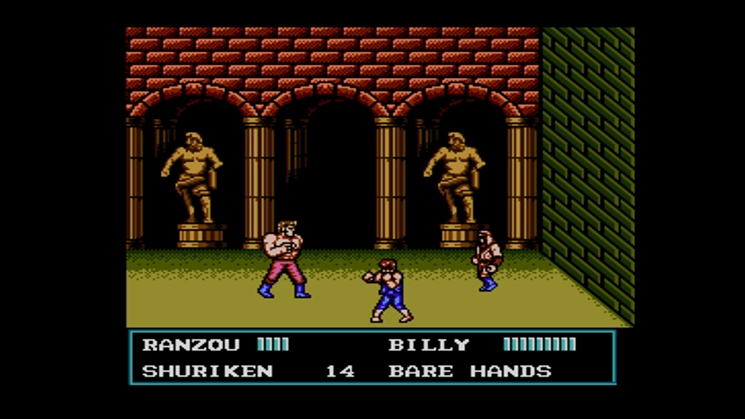
Players can switch between these four characters as each character has their own life bar and primary weapon (Billy, Jimmy, and Chin use their bare hands while Ranzou uses a sword) and a limited supply secondary weapon (Billy and Jimmy use nunchaku, Chin uses iron claws, and Ranzou uses shurikens).
Each character also has basic maneuvers.
Billy and Jimmy can use punches, side kicks, cyclone spin kicks, mid-air somersaults, and flying jump kicks to dispatch foes, with Chin and Ranzou having equivalent maneuvers to finish off enemies also.
Characters can also pick up weapons like army knives, broken bottles, and sais off the ground and use them to fight with.
While featuring some similarities, Double Dragon 3: The Rosetta Stone features a different story, gameplay, enemies, and level design layouts then this version of the game.
About Commodore Amiga
The Commodore Amiga (1985) was ahead of its time technically — multitasking, custom graphics and sound chips — and built a passionate following in Europe in particular, where it rivaled and often outsold contemporary consoles. Amiga collecting today is a niche but dedicated hobby: original boxed software on floppy disk is comparatively scarce since floppies degrade, making well-preserved complete copies genuinely valuable to the right collector.
Gamevaro tracks Double Dragon III: The Sacred Stones (1991) for Commodore Amiga with separate market values for loose, complete-in-box (CIB) and factory-sealed copies, sourced from real eBay sales. Prices also vary by region — PAL, NTSC-U and NTSC-J releases of the same game often sell for different amounts due to print run sizes and regional collector demand.
Adding Double Dragon III: The Sacred Stones (1991) to a Gamevaro collection takes seconds — search by title or scan the box barcode, and the app fills in cover art, release details and current pricing automatically. This AMIGA release dates back to 1991.
Market values by condition
No price data available yet.
Rarity & condition
No market sales have been tracked yet for Double Dragon III: The Sacred Stones (1991) — this could mean it rarely changes hands, or simply that Gamevaro hasn't recorded a sale for it yet. Be the first to add it to your collection.
Complete-in-box (CIB) copies typically command a premium over loose cartridges/discs because the original box and manual are more fragile and get discarded or damaged over time — fewer complete sets survive.
Frequently asked questions
How much is Double Dragon III: The Sacred Stones (1991) worth?
Gamevaro hasn't tracked a market sale for Double Dragon III: The Sacred Stones (1991) (Commodore Amiga) yet, so no current value is available. Prices are sourced from real marketplace sales, and this page will update automatically once sales data comes in.
Is Double Dragon III: The Sacred Stones (1991) rare?
No market sales have been tracked yet for Double Dragon III: The Sacred Stones (1991), which could mean it rarely changes hands or that Gamevaro simply hasn't recorded a sale for it yet.
What's the difference between loose, CIB and sealed for Double Dragon III: The Sacred Stones (1991)?
Loose means cartridge or disc only, CIB (complete in box) includes the original box and manual, and sealed means factory-sealed and never opened. These are tracked as separate market values because the price gap between them can be significant, especially for older releases.
Ratings & Reviews
Also on other platforms