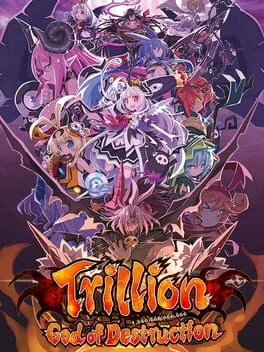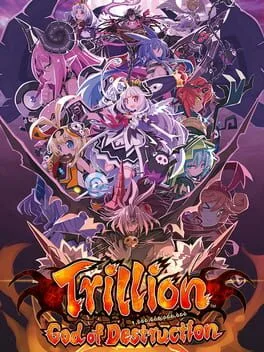
Trillion: God of Destruction
PC · 2015
About this game
Trillion: God of Destruction is a strategy RPG where you must train Overlords to fight Trillion a god of destruction that is eating the underworld.
Trillion sleeps after eating part of the underworld giving you a chance to train.
↓ Read more
You will have 6 attempts at stopping Trillion before the underworld is gone.
You choose from one of three Overlords to train at the start.
You have a set amount of time to train and prepare for the fight against trillion to defend the underworld.
You can train stats, learn skills, go into a dungeon to gather items, strengthen weapons, and rest to get rid of fatigue.
You can also interact with the Overlord to raise affection points, raise affection to a certain level and events related to the Overlord will occur.
Affection points are also used in the battle against Trillion where they act as a buffer for your health and mana.
As long as you still have affection points in the battle you will also have the option to retreat from the battle, giving up a section of the underworld for more time to train.
If the Overlords health reaches 0 they will be able to activate a final death skill that could deal massive damage, seal one of Trillion's attacks, or stop Trillion's advance for a longer training period.
The Overlords items, equipment, and seals will be passed on to the next Overlord you train along with a portion experience.
About PC
PC gaming spans over four decades, from early DOS titles to today's massive Steam and digital-storefront libraries. Because "PC" covers everything from 1990s CD-ROM releases to current AAA titles, it's the single largest platform by game count on Gamevaro. For collectors, PC gaming splits into two very different worlds: physical big-box releases from the 1990s and 2000s (increasingly collectible, especially complete-in-box with original manuals and inserts) and the modern digital library, which Gamevaro tracks for portfolio and spending purposes even though it has no resale market.
Gamevaro tracks Trillion: God of Destruction for PC with separate market values for loose, complete-in-box (CIB) and factory-sealed copies, sourced from real eBay sales. Prices also vary by region — PAL, NTSC-U and NTSC-J releases of the same game often sell for different amounts due to print run sizes and regional collector demand.
Adding Trillion: God of Destruction to a Gamevaro collection takes seconds — search by title or scan the box barcode, and the app fills in cover art, release details and current pricing automatically. This PC release dates back to 2015.
Market values by condition
No price data available yet.
Recent sales
| Date | Type | Region | Price |
|---|---|---|---|
| 2026-07-03 | New (sealed) | OTHER | €0.97 |
Rarity & condition
No market sales have been tracked yet for Trillion: God of Destruction — this could mean it rarely changes hands, or simply that Gamevaro hasn't recorded a sale for it yet. Be the first to add it to your collection.
Condition matters a lot for collector value: loose (cartridge/disc only), complete-in-box (CIB, with original packaging and manual) and factory-sealed copies are tracked separately because the price gap between them can be significant, especially for older releases.
Frequently asked questions
How much is Trillion: God of Destruction worth?
Gamevaro hasn't tracked a market sale for Trillion: God of Destruction (PC) yet, so no current value is available. Prices are sourced from real marketplace sales, and this page will update automatically once sales data comes in.
Is Trillion: God of Destruction rare?
No market sales have been tracked yet for Trillion: God of Destruction, which could mean it rarely changes hands or that Gamevaro simply hasn't recorded a sale for it yet.
What's the difference between loose, CIB and sealed for Trillion: God of Destruction?
Loose means cartridge or disc only, CIB (complete in box) includes the original box and manual, and sealed means factory-sealed and never opened. These are tracked as separate market values because the price gap between them can be significant, especially for older releases.