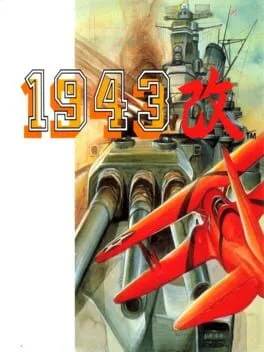
1943: Kai
TurboGrafx-16 · 1991
About this game
Developed and released alongside the Family Computer version, 1943 Kai: Midway Kaisen is an arcade game, an "alternate" version of the original 1943, released in 1987[3] only in Japan.
Most of the graphics and sounds have been reworked, and the game has been made more "extreme" (laser-firing WWII planes and ships that run on ground).
↓ Read more
Further, the trademark P-38 has been replaced with a Boeing Stearman E75 N68828.
In 1991, this version was converted to the PC Engine as simply 1943 Kai, again Japan-only; this version itself contains many additional levels and original music.
The game is set in the Pacific theater of World War II, off the coast of the Midway Atoll.
The goal is to attack the Japanese air fleet that bombed the American aircraft carrier, pursue all Japanese air and sea forces, fly through the 16 stages of play, and make their way to the Japanese battleship Yamato and destroy her. 11 of these stages consist of an air-to-sea battle (with a huge battleship or an aircraft carrier as the stage boss), while 5 stages consist of an all-aerial battle against a squadron of Japanese bombers with a mother bomber at the end.
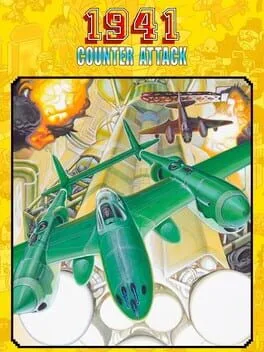
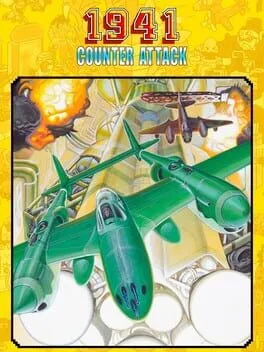
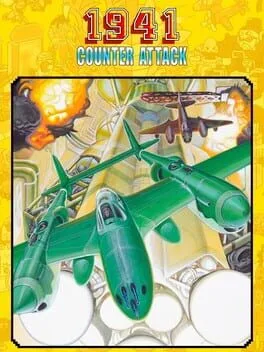
As in 1942, players pilot a P-38 Lightning.
Controls are also similar: button 1 fires main weapons, and button two performs two special actions: a loop maneuver like in 1942, or one of three special attacks in exchange for some of the player's fuel.
Indeed, players now have only one life, in the form of a large "fuel" meter; constantly depleting, but refillable by collecting various powerups (chiefly "Pow" icons).
In 2-player mode, when both players overlap their planes on screen, the energy bar can be transferred from the player with more fuel to the player with less.
Destroying a complete formation of red enemy planes will result in a power-up, such as a health boost or a new main weapon.
There are cheat codes, different for every stage, ranging from holding down a fire button or pointing the joystick in certain direction, player(s) are rewarded with fully upgraded weapons.
About TurboGrafx-16
Known as the PC Engine in Japan, the TurboGrafx-16 (1989) punched well above its small form factor but never found a large audience in North America, leading to one of the smallest console libraries of its generation in the West. That limited Western release makes complete, boxed TurboGrafx-16 games some of the scarcer finds in retro console collecting today.
Gamevaro tracks 1943: Kai for TurboGrafx-16 with separate market values for loose, complete-in-box (CIB) and factory-sealed copies, sourced from real eBay sales. Prices also vary by region — PAL, NTSC-U and NTSC-J releases of the same game often sell for different amounts due to print run sizes and regional collector demand.
Adding 1943: Kai to a Gamevaro collection takes seconds — search by title or scan the box barcode, and the app fills in cover art, release details and current pricing automatically. This TG16 release dates back to 1991.
Market values by condition
NTSC-U
Recent sales
| Date | Type | Region | Price |
|---|---|---|---|
| 2026-07-20 | Loose / Item only | NTSC-U | €114.56 |
Rarity & condition
Only a handful of market sales have been tracked for 1943: Kai, suggesting it doesn't trade hands very often — a sign of relative scarcity compared to more common TurboGrafx-16 titles.
Complete-in-box (CIB) copies typically command a premium over loose cartridges/discs because the original box and manual are more fragile and get discarded or damaged over time — fewer complete sets survive.
Frequently asked questions
How much is 1943: Kai worth?
1943: Kai for TurboGrafx-16 is currently worth €114.56 loose. Prices are based on real sales and update regularly on Gamevaro.
Is 1943: Kai rare?
1943: Kai has only a handful of tracked market sales, suggesting relative scarcity compared to more common TurboGrafx-16 titles.
What's the difference between loose, CIB and sealed for 1943: Kai?
Loose means cartridge or disc only, CIB (complete in box) includes the original box and manual, and sealed means factory-sealed and never opened. These are tracked as separate market values because the price gap between them can be significant, especially for older releases.
Ratings & Reviews
Also on other platforms
More TurboGrafx-16 games