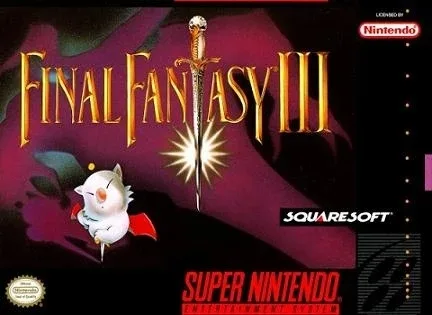
Final Fantasy III
Nintendo Wii U · 2011
About this game
In a remote village of Ur, four orphan boys were raised by the priest Topapa.
Once, the Crystal of Wind, guarded by the people of Ur, sank deep into the earth.
↓ Read more
The four boys decided to retrieve it from there and went down into an underground cave.
But when they found the crystal, it spoke to them and from its words they understood they were chosen for a much more important and world-embracing mission...
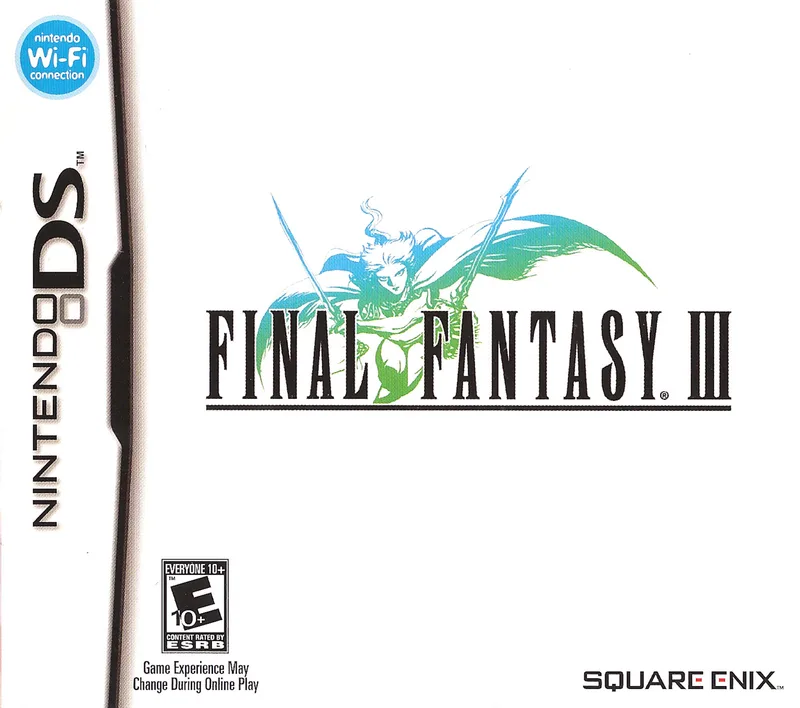
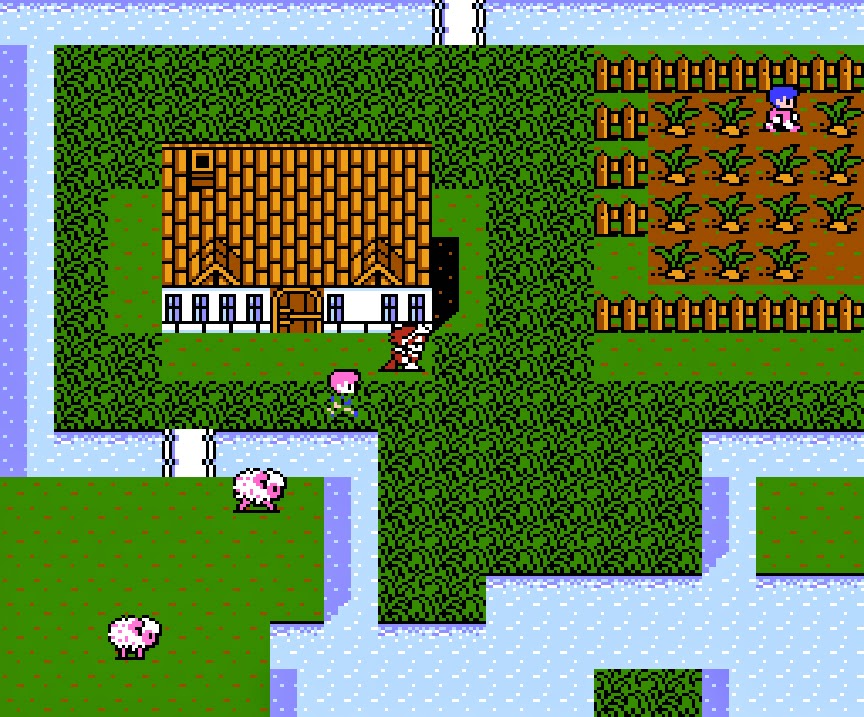
Final Fantasy III is the third Final Fantasy game for the NES platform.
It was the last Final Fantasy game that does not use the ATB (active time battle) system (until it was removed again in Final Fantasy X ).
The turn-based battle engine has been improved: if the enemy is defeated, the next character will automatically switch to another enemy, and not hit the air, like in the previous two games.
Before the game begins, you give names to the four boys, which look the same (only in different colors) and belong all to the same class - the scrawny Onion Kid.
Very quickly, however, you're able to give your heroes "jobs" - proper character classes, such as Fighter, Black Mage, Viking, Shaman and others.
Each job has different capabilities and can use different equipment.
More powerful jobs become available later in the game.
The characters can change jobs throughout the game, though it costs them "Capacity Points" (which are earned in battle).
The game itself is, like the previous games, a top-down RPG where your characters travel in the overworld, sometimes entering cities and dungeons to buy equipment, rest and fight random encounters and bosses with turn-based combat.
Some minor issues were slightly changed to resemble more the classical Final Fantasy look (such as the menu layout etc.).
About Nintendo Wii U
The Wii U (2012) was commercially Nintendo's least successful home console, hampered by market confusion over whether the GamePad tablet controller was a new device or a Wii accessory. Its low sales mean smaller overall print runs across the board, and several first-party and indie darlings have already become noticeably pricier than their commercial performance would suggest, since there are simply fewer copies in circulation.
Gamevaro tracks Final Fantasy III for Nintendo Wii U with separate market values for loose, complete-in-box (CIB) and factory-sealed copies, sourced from real eBay sales. Prices also vary by region — PAL, NTSC-U and NTSC-J releases of the same game often sell for different amounts due to print run sizes and regional collector demand.
Adding Final Fantasy III to a Gamevaro collection takes seconds — search by title or scan the box barcode, and the app fills in cover art, release details and current pricing automatically. This WIU release dates back to 2011.
Market values by condition
No price data available yet.
Rarity & condition
No market sales have been tracked yet for Final Fantasy III — this could mean it rarely changes hands, or simply that Gamevaro hasn't recorded a sale for it yet. Be the first to add it to your collection.
Condition matters a lot for collector value: loose (cartridge/disc only), complete-in-box (CIB, with original packaging and manual) and factory-sealed copies are tracked separately because the price gap between them can be significant, especially for older releases.
Frequently asked questions
How much is Final Fantasy III worth?
Gamevaro hasn't tracked a market sale for Final Fantasy III (Nintendo Wii U) yet, so no current value is available. Prices are sourced from real marketplace sales, and this page will update automatically once sales data comes in.
Is Final Fantasy III rare?
No market sales have been tracked yet for Final Fantasy III, which could mean it rarely changes hands or that Gamevaro simply hasn't recorded a sale for it yet.
What's the difference between loose, CIB and sealed for Final Fantasy III?
Loose means cartridge or disc only, CIB (complete in box) includes the original box and manual, and sealed means factory-sealed and never opened. These are tracked as separate market values because the price gap between them can be significant, especially for older releases.
Ratings & Reviews
Also on other platforms
![Final Fantasy I+II [Premium Package]](/covers/ps1/106558.webp)